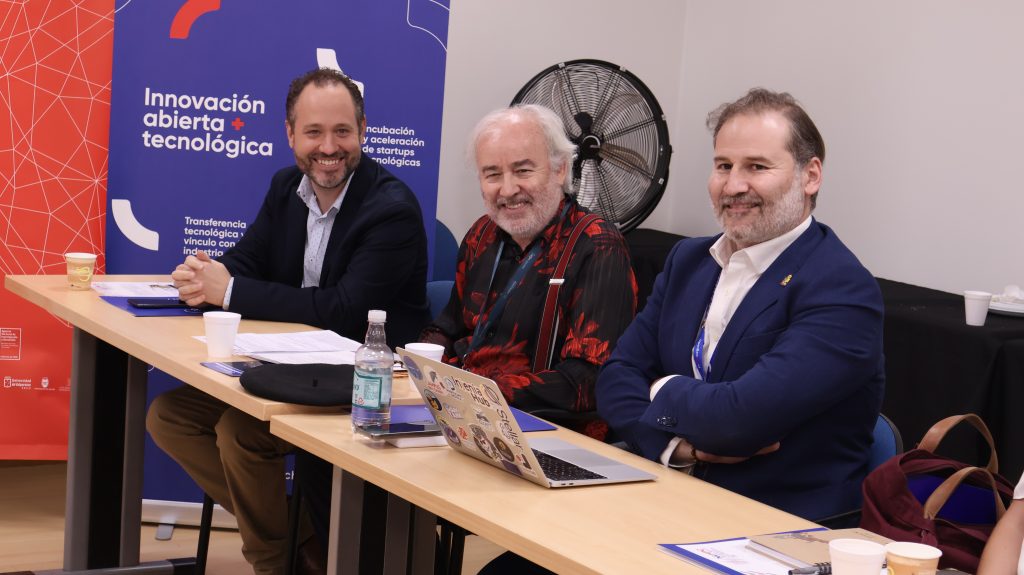
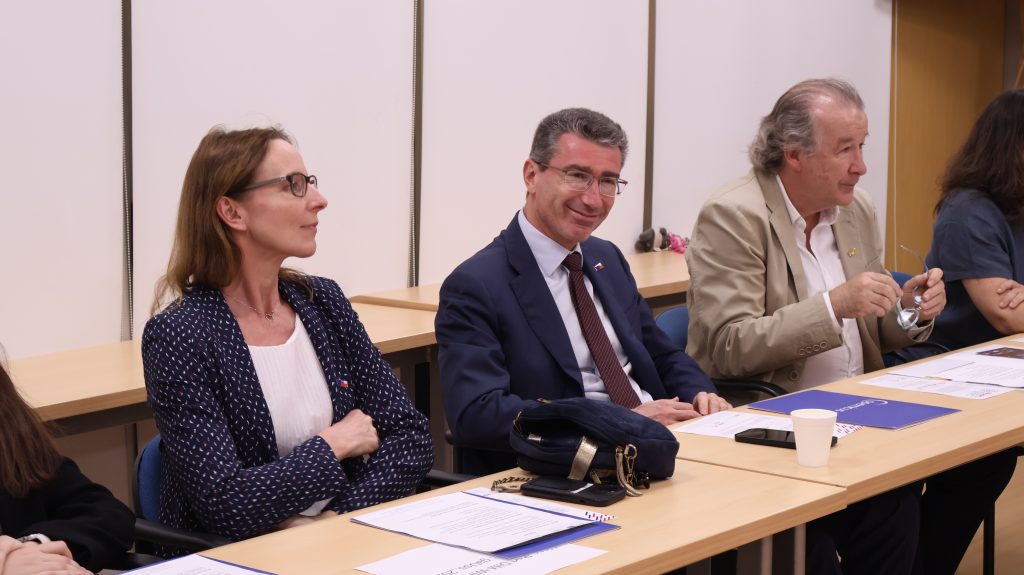
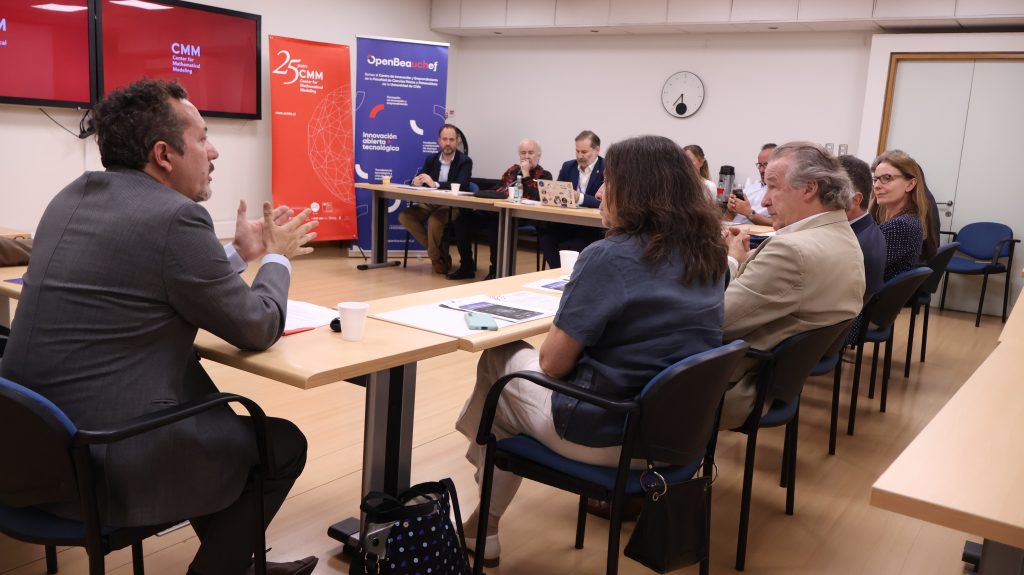
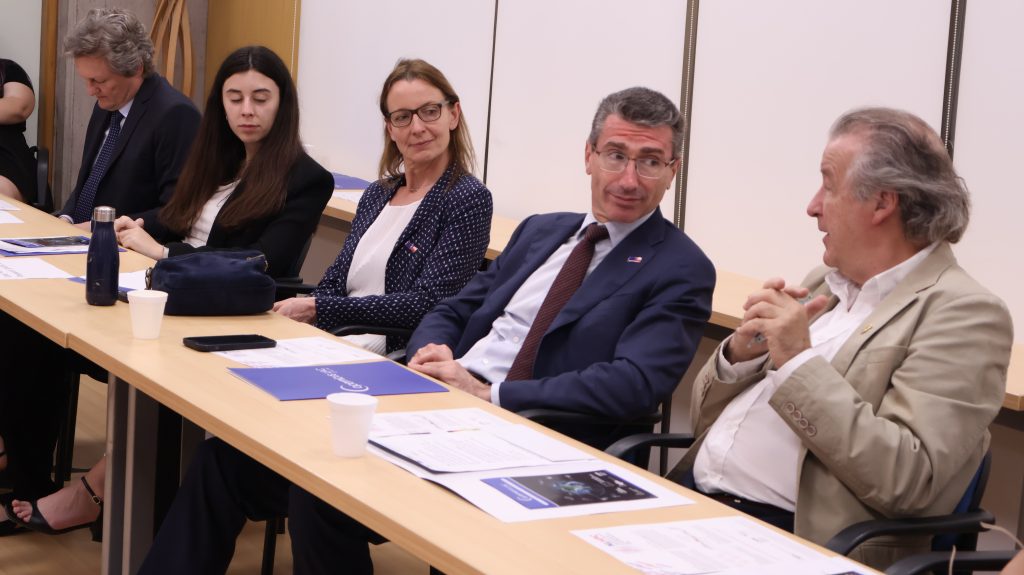
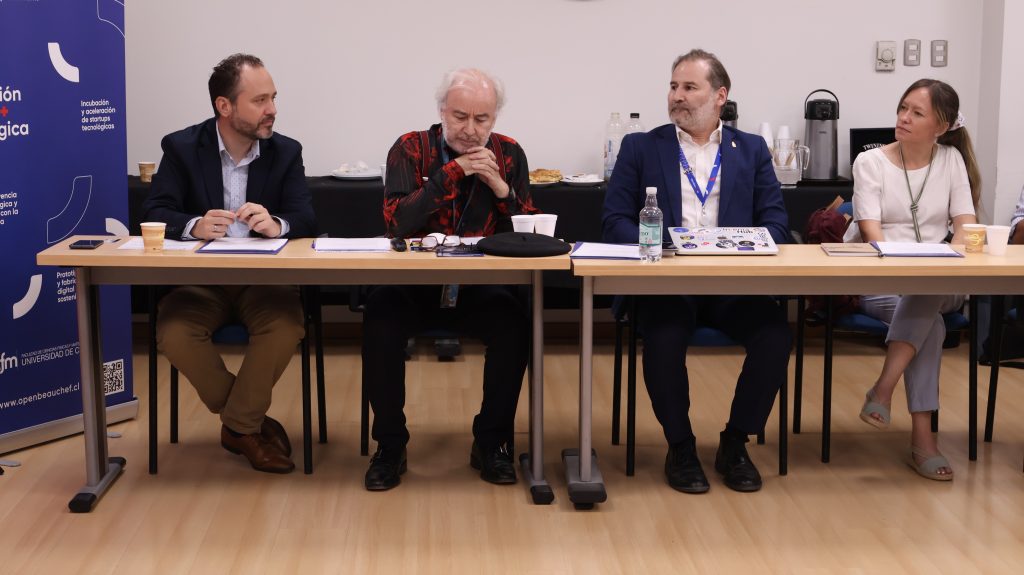
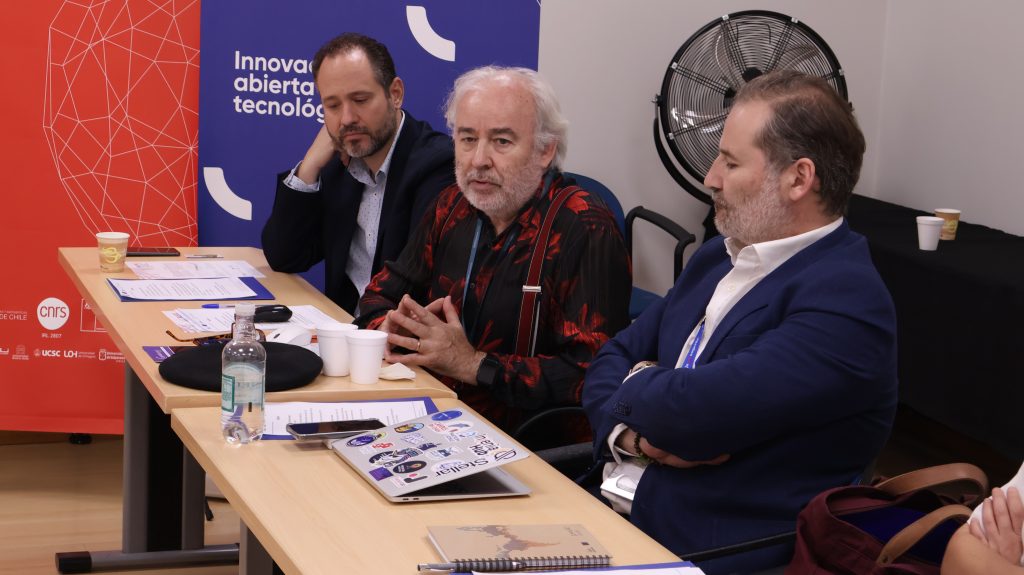
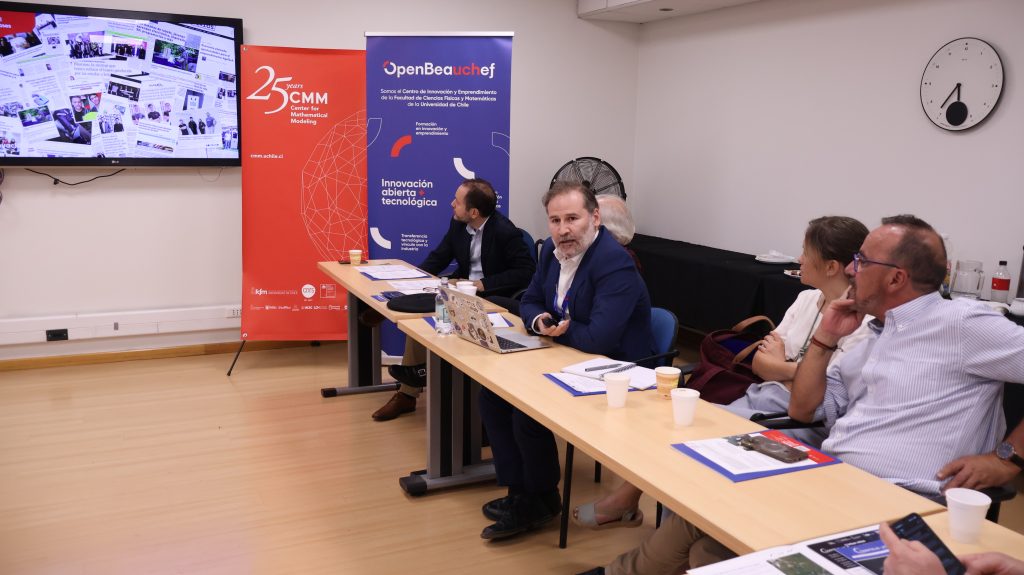
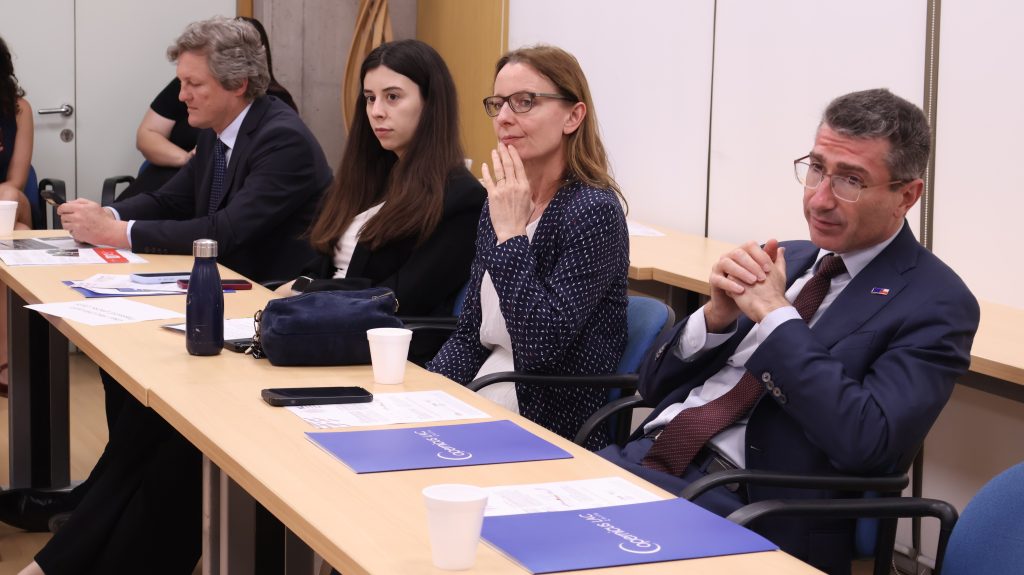
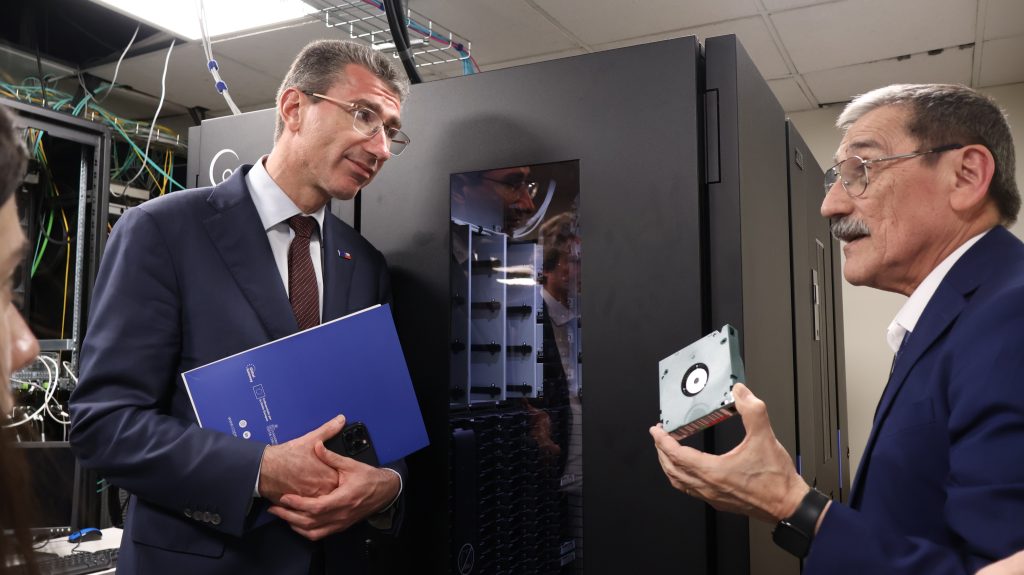
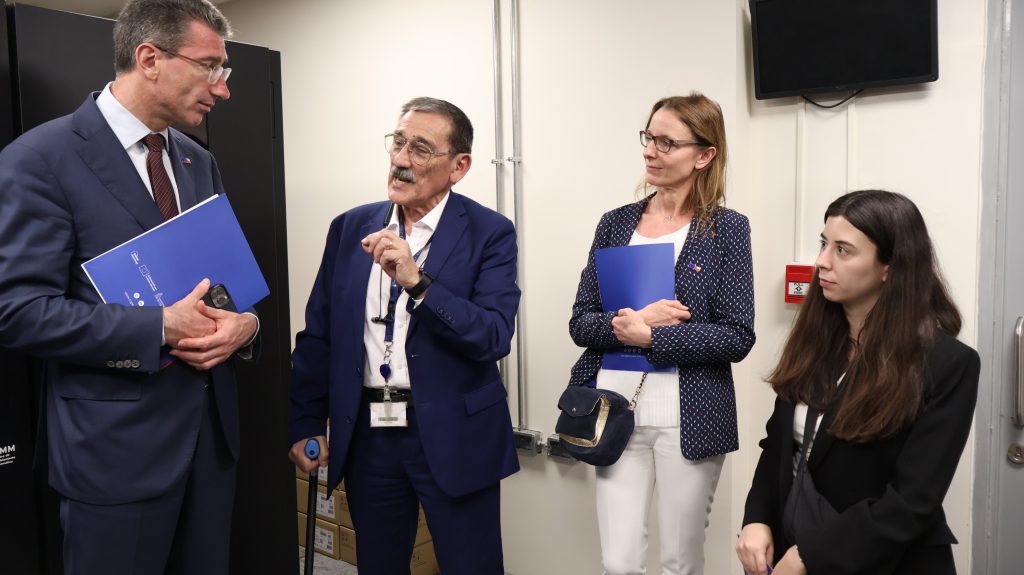
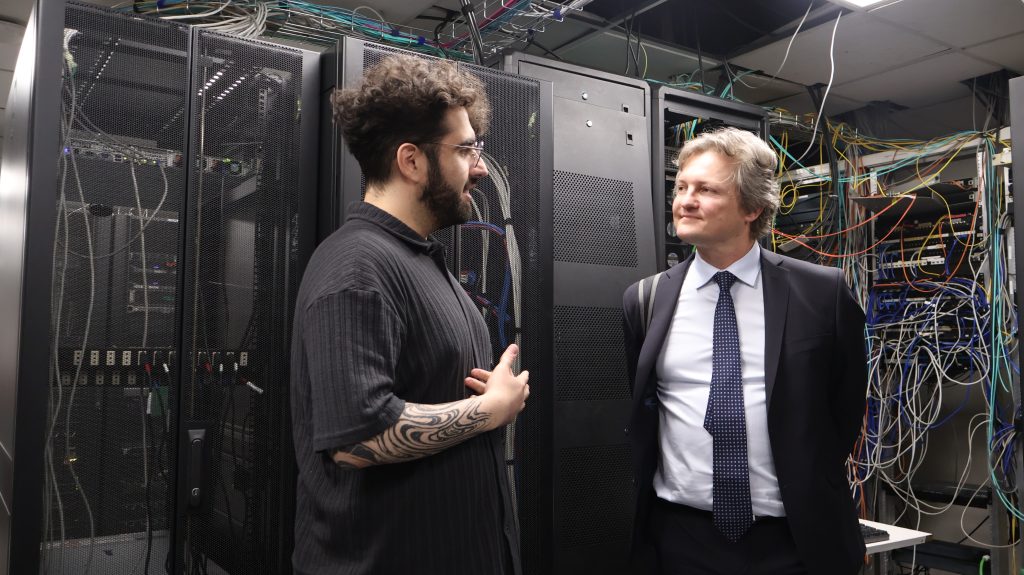
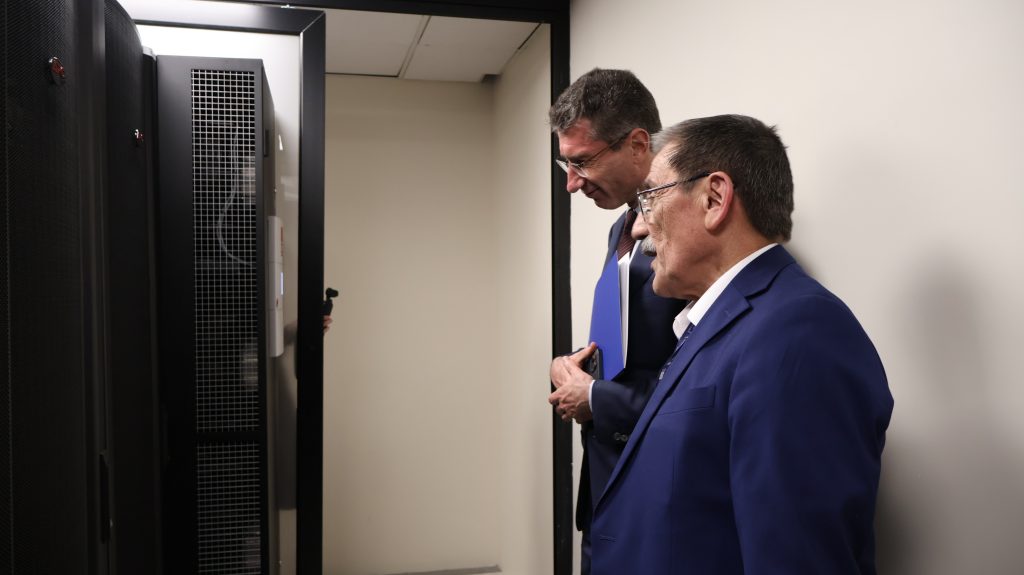
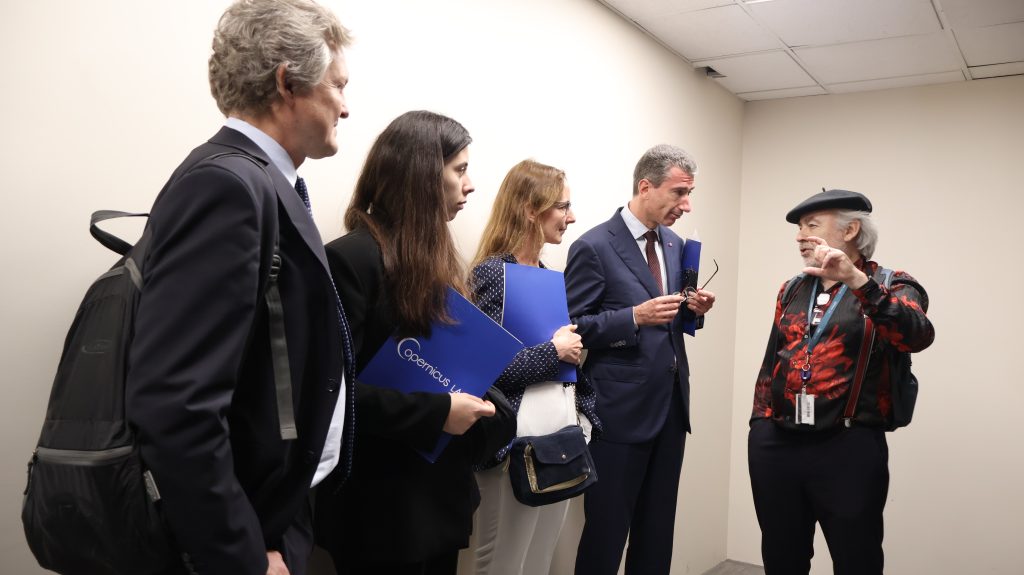
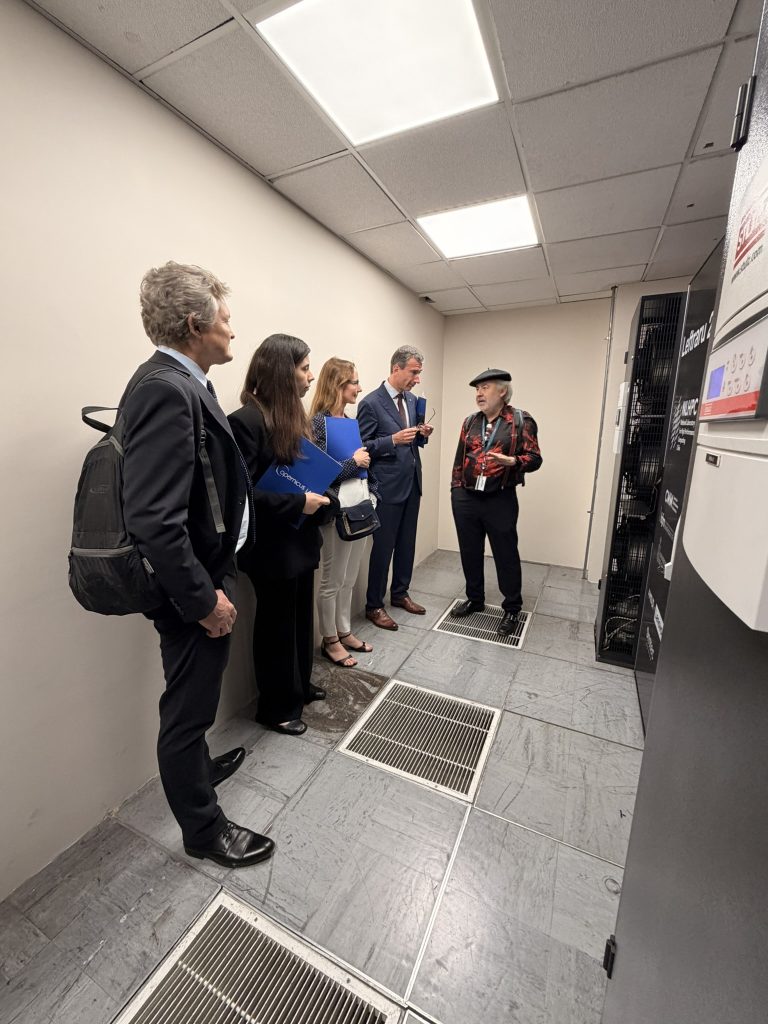
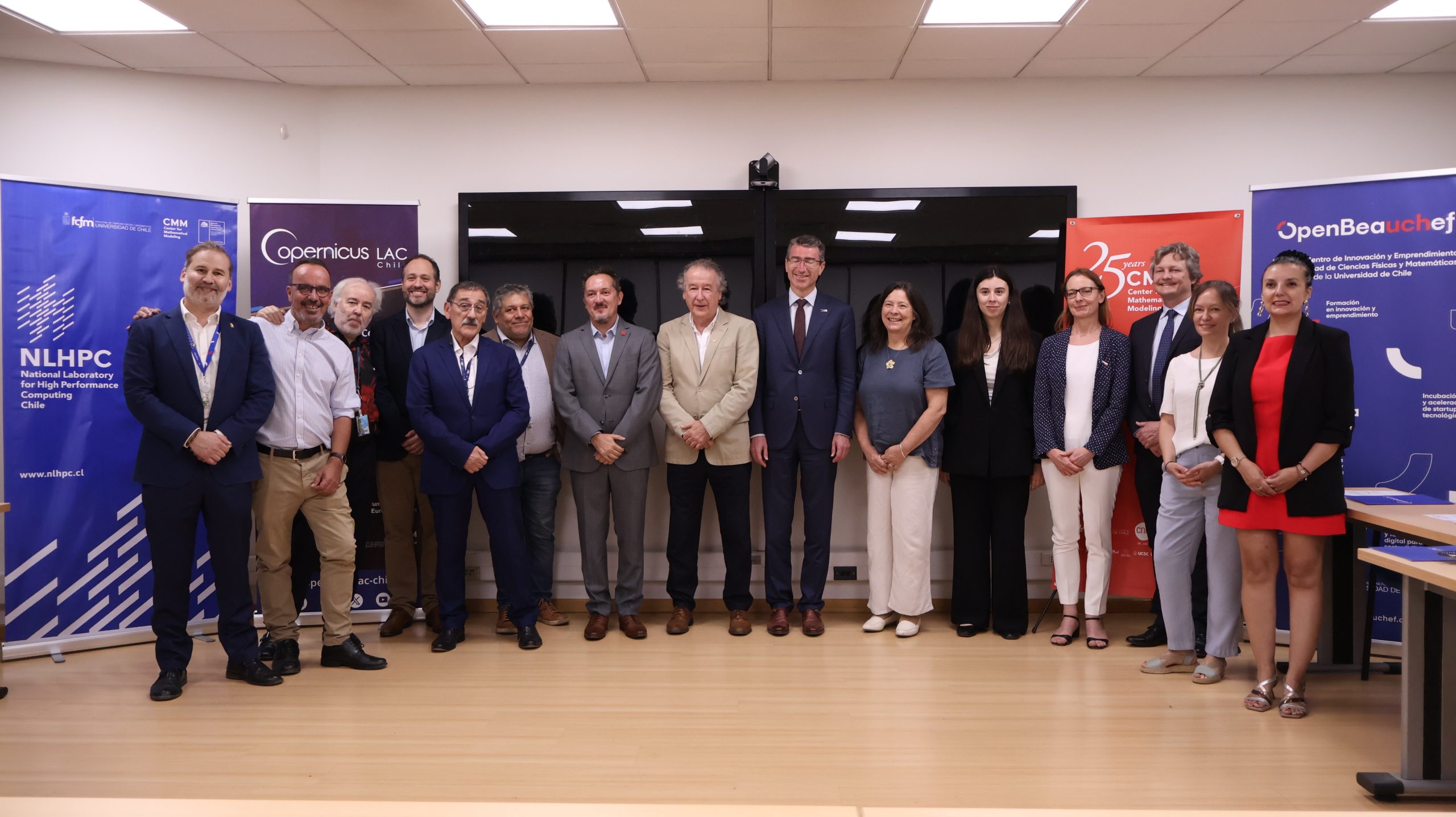
On Tuesday, 13 January, a high-level meeting was held at the Mathematical Modelling Centre (CMM) of the Faculty of Physical and Mathematical Sciences (FCFM) of the University of Chile. This event was held as part of the official visit of Marc Lemaître, Director of the Directorate-General for Research and Innovation (DG RTD) of the European Commission, the executive body of the European Union.
During the meeting, the main scientific and technological cooperation initiatives that the EU and the FCFM are developing jointly were presented: CopernicusLAC Chile, OpenCopernicus, the European Union–Latin America and Caribbean Bi-regional Supercomputing Network (EU–LAC HPC Network) and SCAI-Lab, highlighting the strategic role of these platforms in strengthening regional capacities in Earth observation, data science and advanced digital infrastructure.
DG RTD is responsible for designing and implementing the European Commission’s research and innovation policies. It also implements and oversees the European Union’s Horizon Europe research and innovation programme, together with the partnerships and missions developed within its framework. Horizon Europe, in which Chile has been participating for several years, is a unique programme of excellence, open to international cooperation and funded with €93.5 billion for the period 2021–2027, addressing a wide range of scientific and technical challenges.
At the heart of European competitiveness, the EU’s research and innovation policy supports the European Commission’s key priorities for the period 2024-2029 by funding knowledge and transformative innovations in all scientific fields, with a particular focus on the green and digital transitions, clean energy, sustainability and health, among others. DG RTD is headed by Marc Lemaître, who holds a master’s degree in European Economics and has 25 years of experience in international and European affairs, both at the European Commission and in the Luxembourg diplomatic service.
Regarding the visit, Director Lemaître commented, ‘The Copernicus programme data is an invaluable global asset, and its true value lies in the wide range of applications it enables. In this sense, the new services we will be launching soon will have even greater strategic value for data science and public policy in Latin America and the Caribbean.’
‘The CopernicusLAC Chile Centre has established itself as the true cornerstone of the bi-regional partnership in Earth observation. The success of this platform lies not only in the excellence of its technical expertise, but also in its vision to develop new services tailored to the specific needs of Latin America,’ said the European Union’s ambassador to Chile, Claudia Gintersdorfer.
The event included presentations by Héctor Ramírez, director of CMM; Jaime San Martín, scientific director of the National High Performance Computing Laboratory (NLHPC); Alejandro Pantoja, executive director of OpenBeauchef; and Florencio Utreras, director of CopernicusLAC Chile, who presented their respective projects to the delegation led by Director Lemaître.
From CopernicusLAC Chile, Florencio Utreras detailed the work that the project will carry out during 2026. “The most important challenges we must overcome are, first, to ensure regular, systematic and relevant commissioning for the different countries in the region. The second challenge is for Latin American and Caribbean countries to take advantage of and use the data from our services, as well as to expand on them in accordance with their own interests and needs in the region. Finally, it is important to consolidate a long-term development model with EU support, in order to contribute to the development of new knowledge, which can be worked on based on research,” he said.
“The visit by the Director-General for Research and Innovation of the European Union confirms that the scientific and technological capabilities developed at the FCFM are not only relevant at the national level but are also part of a global strategic conversation. Initiatives such as CopernicusLAC Chile show that, with long-term vision and sustained international collaboration, it is possible to develop advanced scientific infrastructure to address urgent public challenges in the region with a significant social and productive impact,” said Francisco Martínez, Dean of the Faculty of Physical and Mathematical Sciences at the University of Chile.
Héctor Ramírez, director of the Centre for Mathematical Modelling, said: “This visit reaffirms the role of the CMM as a scientific platform that combines excellent research with advanced infrastructure to address public and strategic challenges. The integration of CopernicusLAC Chile into the CMM ecosystem expresses a vision in which data storage, processing, distribution and high-performance computing (HPC) capabilities are put at the service of sustainable development in Latin America and the Caribbean, concretely strengthening bi-regional cooperation between Chile and the European Union.”
The visit is part of the EU-Chile cooperation portfolio in science, technology and innovation, highlighting that the most concrete, visible and tangible advances in this collaboration are concentrated in the scientific ecosystem organised around the FCFM. In this context, the projects presented clearly demonstrate how this environment is consolidating its position as a strategic player in areas such as Earth observation, data science and digital infrastructure, with a focus on sustainable development in Latin America and the Caribbean.