More details
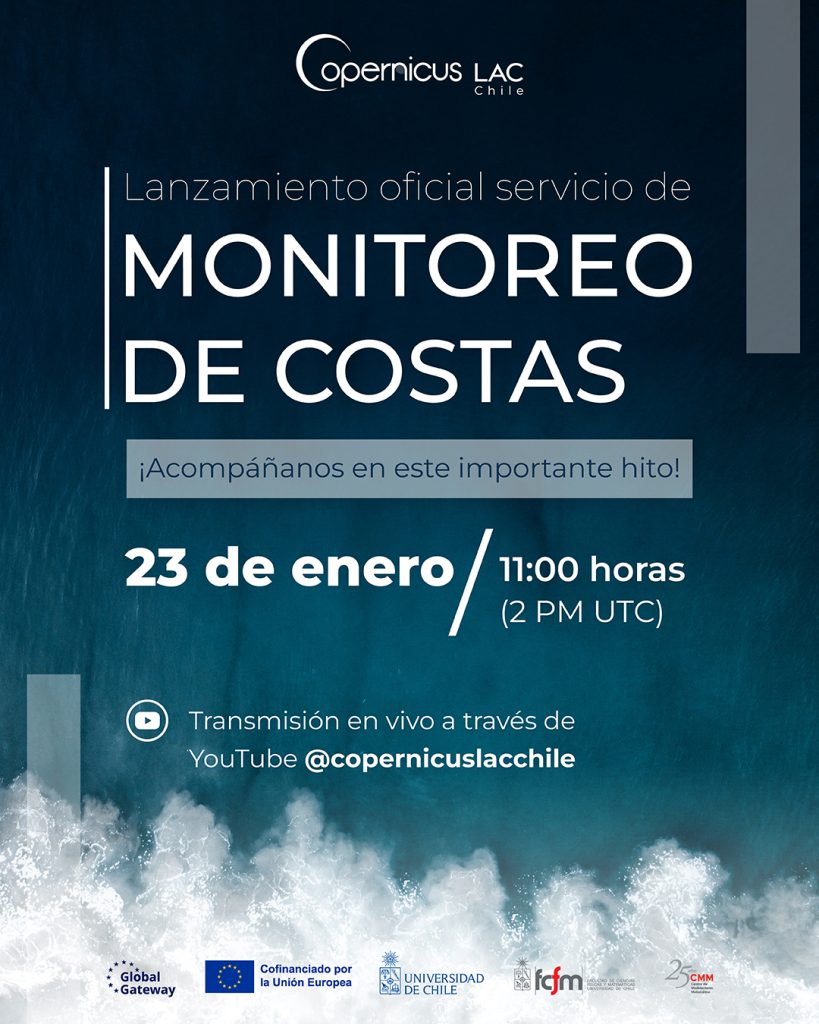
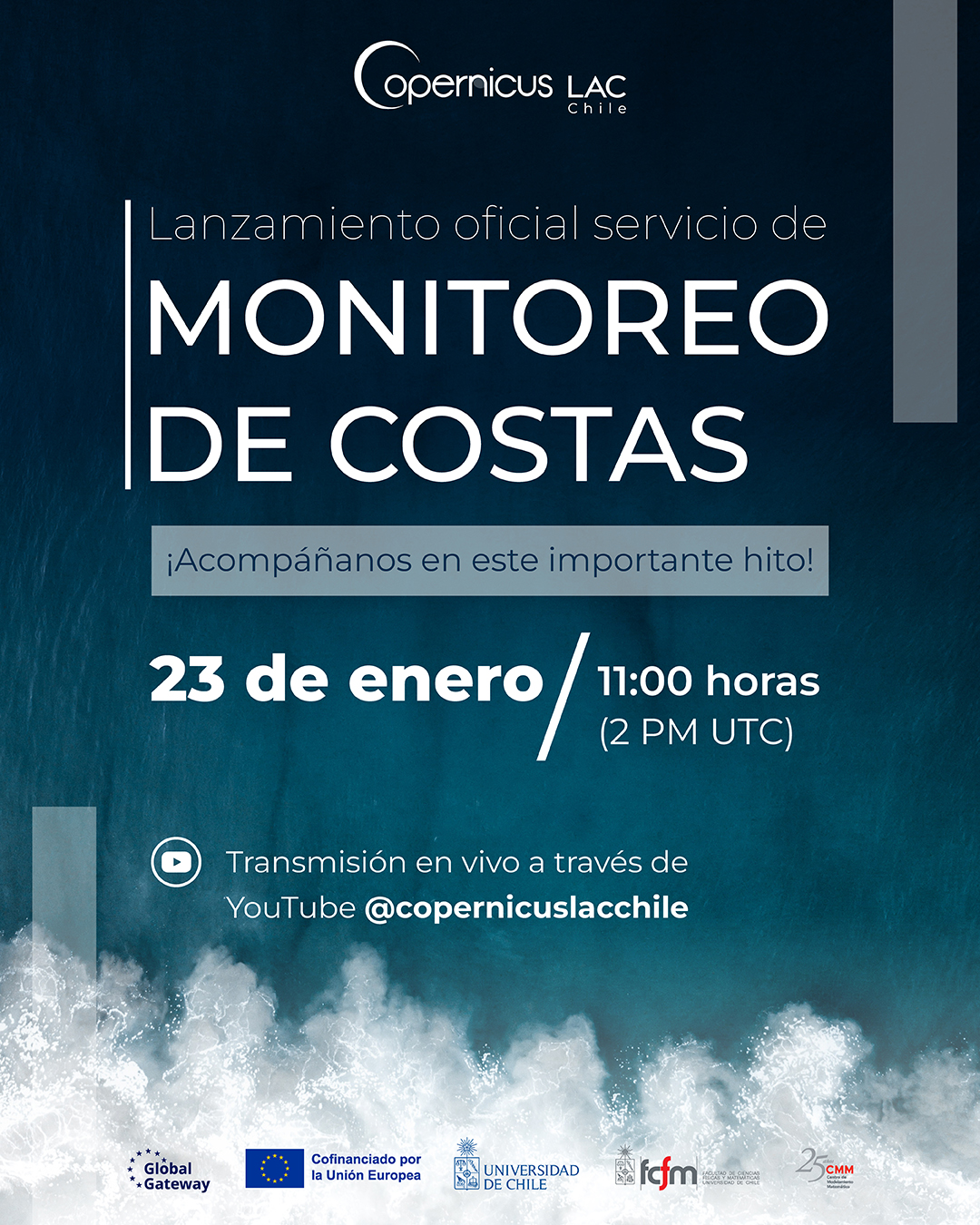
The CopernicusLAC Chile Coastal Monitoring Service is an Earth observation tool designed for the continuous analysis and monitoring of coastal and ocean systems in Latin America and the Caribbean. Its objective is to characterize ocean and coastal dynamics through consistent, up-to-date, and traceable scientific information that supports planning, coastal management, and decision-making by public, private, and academic institutions.
The service adapts and regionalizes Copernicus Marine Services, integrating multi-source satellite information with in situ data and advanced spatial and temporal analysis methodologies. This allows for systematic monitoring of the state of the ocean, considering regional variability, and the generation of products tailored to the specific needs identified in the region.
CopernicusLAC Chile provides key inputs for coastal spatial planning, climate change adaptation, and risk management, as well as supporting the monitoring of marine ecosystems, primary productivity, and environmental conditions relevant to fisheries and aquaculture. It also contributes to the regional harmonization and standardization of oceanographic data, promoting interoperability and strengthening local capacities through open access, scientifically validated information.
The product covers coastal and oceanic areas of Latin America and the Caribbean, with an approximate spatial resolution of 1–2 km and monthly temporal resolution. It features continuous fields with no data gaps, documented quality control, continuous improvements in new versions, and methodological alignment with international recommendations. In its first stage, the variables monitored are sea surface temperature and chlorophyll-a, an indicator of phytoplankton biomass and primary productivity. In the coming months, new variables will be incorporated into the service.