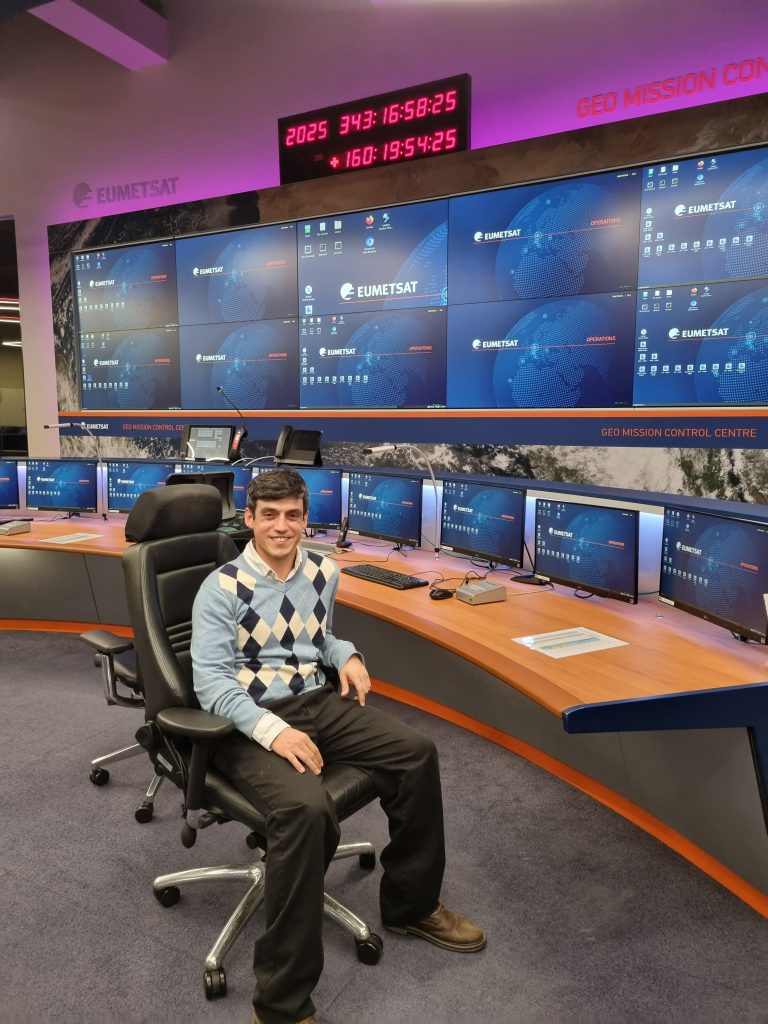
The sixth edition of the International Ocean Color Science (IOCS) 2025 Meeting was held in Darmstadt, Germany, from December 1 to 4. It was convened by the International Ocean Color Coordination Group (IOCCG), organized by the European Organization for the Exploitation of Meteorological Satellites (EUMETSAT) and supported by the European Union’s Copernicus Program.
This year’s theme was “Ocean Color: Serving Earth System Science and Our Society”, and it brought together the global scientific and civil community that actively studies, develops, and uses products related to this topic, as well as space agencies that produce this information. Products related to ocean color make it possible to monitor the state of coastal and ocean biodiversity, thereby improving productive practices such as fishing and encouraging access to in situ data collection, among other applications.
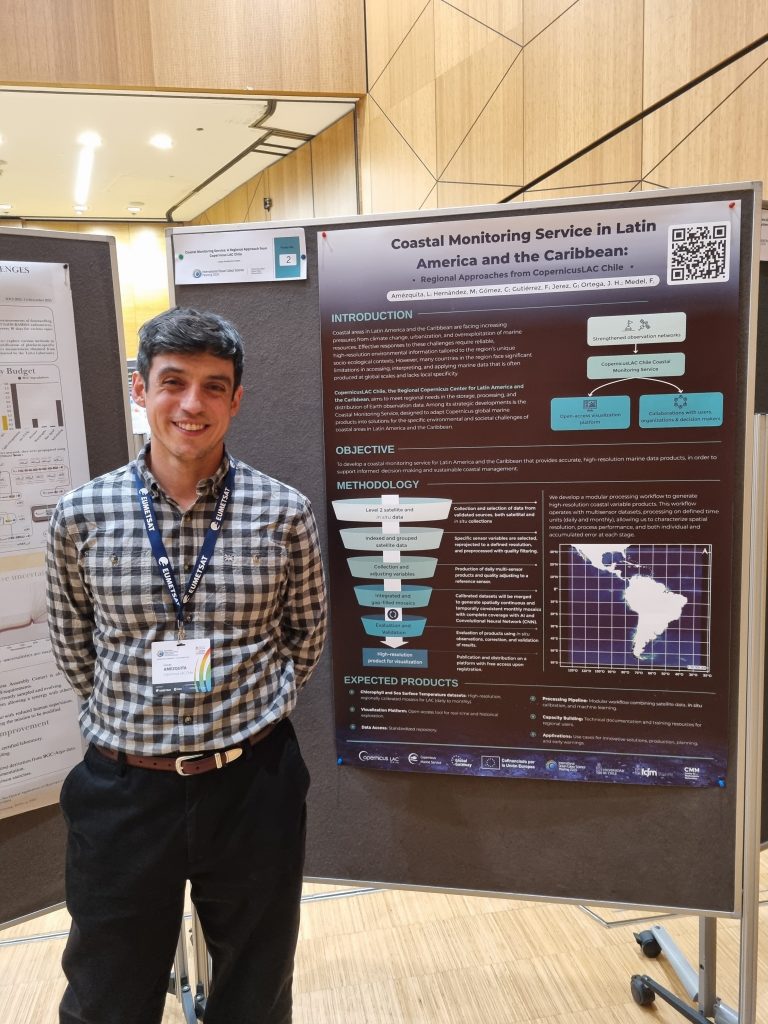
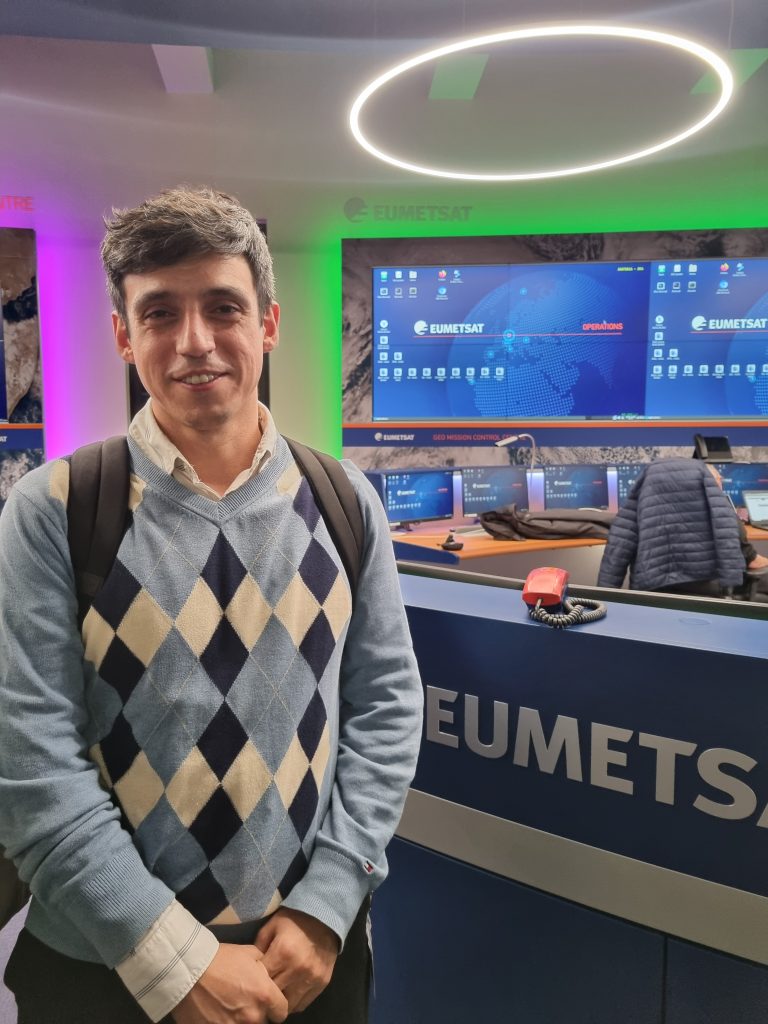
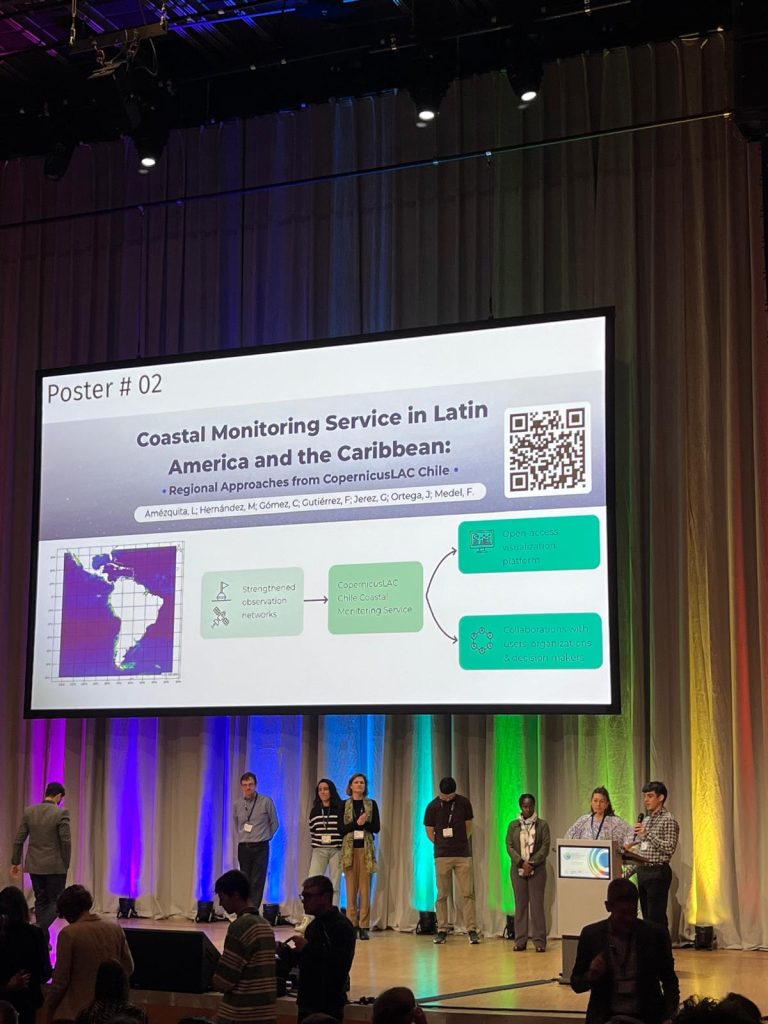
Lucas Amézquita, an engineer in Renewable Natural Resources and specialist in remote sensing, attended on behalf of CopernicusLAC Chile. He presented the Coastal Monitoring service, specifically the chlorophyll product, which is scheduled for launch in early 2026.
“This is a critical variable for the evaluation of coastal ecosystem processes, as it allows for the characterization of primary productivity, the identification of spatial and temporal patterns, and the analysis of trends associated with climate variability and anthropogenic pressures. The product presented highlighted the emulation of globally used processing flows, regional calibration and validation with in situ data, as well as the generation of high spatial and temporal resolution products. Sharing this development with the international community positions CopernicusLAC Chile as an actor that adapts Copernicus’ global capabilities to the environmental and coastal management realities of Latin America and the Caribbean (LAC),” explains Amézquita.
Among the various needs facing the product, Amézquita comments that much of the feedback focused on improving spatial resolution for the entire LAC region. He adds that “there is also thechallenge of coordinating validation criteria with in situ data, that is, having some kind of centralization of the efforts made by research institutions, universities, and public and private entities in data collection, in order to facilitate the validation of satellite information.”
Lucas maintains that the scientific community attending IOCS 2025 is focusing on issues such as sargassum, plastic waste in the sea, and carbon flux in the oceans. Among the new and innovative methodologies, he highlights the use of multiple satellites as a simultaneous source of information, although he emphasizes the need for further study of coastal areas, as their behavior is highly complex and requires more specific methodologies.
Participation in IOCS 2025 allowed not only to disseminate the work carried out by CopernicusLAC Chile, but also to gather direct feedback from the international community on the challenges and opportunities in coastal ocean monitoring. The conference reaffirmed the importance of developing regional services that are in line with global standards but incorporate local knowledge and situational validation, thereby strengthening the relevance and impact of products in environmental and coastal management decision-making.